
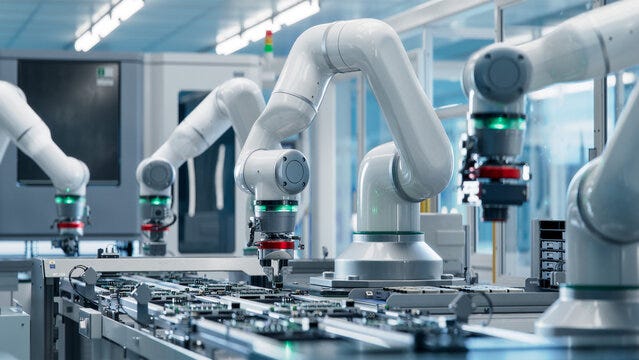
Robotics integration has become one of the most influential developments shaping the future of modern manufacturing plants. As industries strive to improve efficiency, boost output, and maintain consistent product quality, robotics has transitioned from being a high-tech trend to becoming a fundamental operational necessity. Manufacturers across automotive, electronics, aerospace, food processing, and consumer goods sectors now rely heavily on robotic automation to streamline workflow and enhance precision. With global competition increasing and customer expectations rising, companies must adopt advanced automation strategies to remain competitive while reducing operational costs and workplace risks. This SEO-optimized article explores in depth how robotics integration is transforming production systems, the value it brings to manufacturers, and why it is considered the backbone of next-generation industrial operations.
One of the most significant advantages of robotics integration is the immense improvement in productivity and operational efficiency. Robots are designed to perform repetitive tasks at high speed without fatigue, allowing production lines to run continuously for extended periods. This enhanced consistency reduces downtime, increases throughput, and ensures that every unit produced maintains the same precision and quality. In high-demand sectors such as automotive or consumer electronics, this constant performance is crucial for meeting tight schedules and staying ahead of competitors. Robotics integration also minimizes bottlenecks in manual operations by automating tasks like welding, assembly, material handling, packaging, and inspection. When combined with intelligent manufacturing software, robots can adapt to real-time data, optimize production flow, and deliver a smarter, more responsive manufacturing environment. As a result, companies can maintain stable output levels even during peak demand, giving them a significant edge in today’s fast-paced global market.
Robotics integration also plays a critical role in enhancing product quality and reducing human error. Manual production processes naturally introduce variations due to worker fatigue, distractions, or inconsistency across shifts. Robots, on the other hand, execute tasks with exceptional accuracy, ensuring that every part meets strict dimensional and functional requirements. This is especially important in sectors where even the smallest deviation can affect performance or safety, such as aerospace components, medical devices, and precision engineering. Advanced robotic systems equipped with machine vision technology can perform real-time inspections, detect defects, and automatically adjust their movements to correct potential errors. By integrating robotics into quality assurance processes, manufacturers can significantly reduce scrap rates, minimize rework, and maintain superior reliability across production batches. The ability to collect and analyze data during every stage of production also contributes to continuous improvement, helping manufacturers identify trends, refine processes, and ensure long-term quality stability.
Beyond quality and efficiency improvements, robotics integration is reshaping workplace safety and labor dynamics. Manufacturing environments often involve tasks that are hazardous, strenuous, or ergonomically challenging for human workers. Robots excel at handling heavy loads, operating in high-temperature environments, working with toxic substances, or performing repetitive motions that can lead to injury. By delegating these tasks to robots, manufacturers significantly reduce workplace accidents and create safer, more comfortable conditions for employees. This shift allows workers to transition into more skilled roles such as robot programming, system maintenance, quality monitoring, and process optimization. Instead of replacing human labor, robotics integration often complements it—enhancing human capabilities and creating opportunities for professional growth. As industries adopt collaborative robots (cobots) designed to work safely alongside humans, the synergy between robotics and skilled operators becomes even stronger. This evolving relationship supports a smarter and more sustainable workforce model for the manufacturing plants of the future.
Flexibility and adaptability are additional reasons robotics integration has become essential for modern production systems. In the past, robots were primarily used for large-scale manufacturing processes with repetitive tasks. Today’s advanced robots are far more versatile, able to handle complex tasks, learn new operations through programming or AI-guided systems, and adapt to product variations with minimal downtime. This flexibility is crucial as manufacturers face increasing pressure to produce customized products, accommodate shorter product life cycles, and respond quickly to market changes. Reconfiguring a robotic system is often faster and more cost-effective than retraining large teams or redesigning entire production lines. This agility enables businesses to scale production faster, introduce new product variations, and remain competitive in industries driven by innovation. In sectors such as electronics, where product updates are frequent, robotic systems allow factories to switch from one model to another with minimal disruption, ensuring a smooth and efficient transition.
Ultimately, the integration of robotics into modern manufacturing plants represents a transformative step toward smarter, more efficient, and more resilient industrial operations. The combination of speed, precision, reliability, and adaptability that robotics offers is unmatched by traditional manual processes. As automation technologies become increasingly intelligent—leveraging AI, machine learning, IoT connectivity, digital twins, and real-time analytics—the potential for manufacturing excellence continues to expand. Robotics integration reduces costs, improves quality, enhances safety, and empowers organizations to operate with greater agility in a competitive global landscape. In the years ahead, manufacturers that embrace advanced robotics will set new benchmarks for productivity and innovation. By investing in the right systems and cultivating a skilled workforce capable of managing these technologies, companies can future-proof their operations and position themselves as leaders in the next era of industrial growth.