
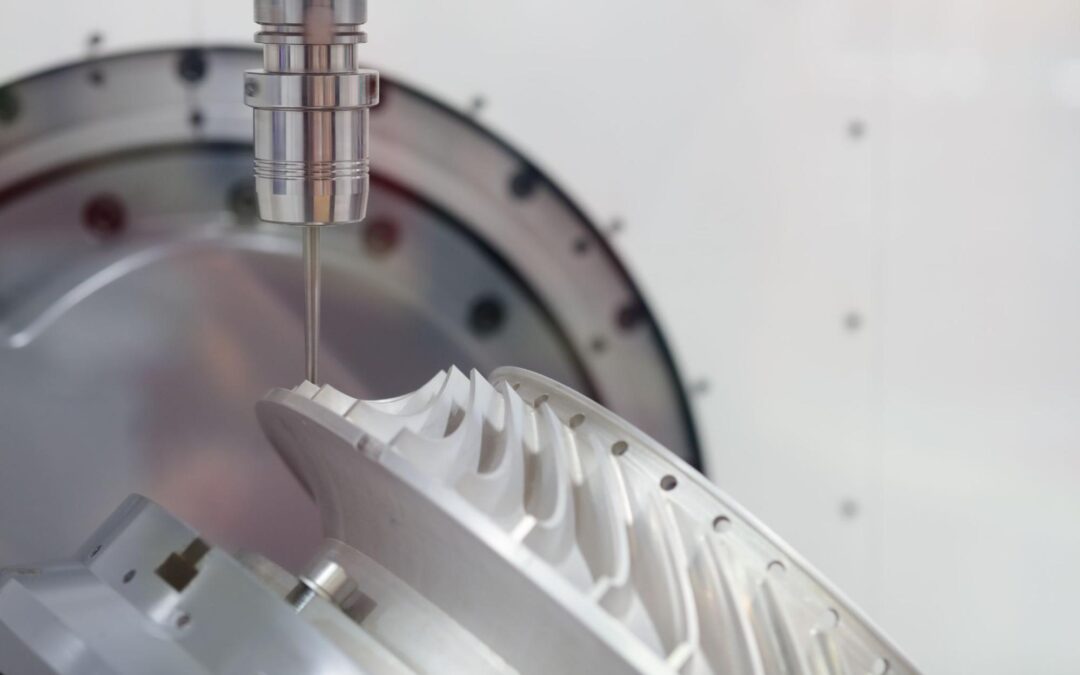
In the rapidly advancing world of precision engineering, 5-axis CNC machines have emerged as one of the most transformative technologies for manufacturers seeking higher accuracy, scalability, and design freedom. These machines operate along five different axes simultaneously, allowing for unparalleled movement and control compared to traditional 3-axis systems. As industries increasingly demand intricate, lightweight, and high-performance components, 5-axis CNC machining has become an essential solution rather than a luxury. Aerospace, automotive, medical, energy, and robotics sectors now rely on this machining capability to produce geometries that were once considered impossible or too costly. By optimizing cutting angles, reducing repositioning steps, and improving tool access, 5-axis machines enable manufacturers to meet tighter tolerances, shorten production cycles, and improve overall operational efficiency. In this SEO-optimized guide, we explore how 5-axis CNC technology enhances complex part production and why it continues to redefine modern manufacturing.
One of the primary advantages of 5-axis CNC machines is their ability to produce highly complex shapes with significantly fewer setups. In conventional machining, intricate parts often require multiple clamping and repositioning processes, introducing the risk of human error and dimensional inconsistencies. With 5-axis movement, the workpiece can be approached from virtually any angle, eliminating the need for constant adjustments. This single-setup capability ensures the part remains perfectly aligned throughout the machining process, enhancing repeatability and reducing overall machining time. Engineers gain the freedom to design more advanced geometries—such as undercuts, deep cavities, compound curves, and organic structures—that previously posed challenges for traditional methods. This makes 5-axis machining ideal for turbine blades, prosthetic components, aerospace brackets, injection mold cores, and other high-value precision parts. The reduction in manual handling and setup changes not only improves quality but also significantly lowers production costs, especially for complex or custom components.
Another key strength of 5-axis CNC machining is the improvement in tool orientation and cutting conditions. Being able to tilt and rotate the tool or workpiece allows the cutter to maintain an optimal cutting angle at all times. This reduces tool wear, improves surface finish quality, and enhances overall material removal efficiency. Machining curved surfaces becomes smoother and more precise because the tool consistently follows the natural geometry of the design, eliminating unnecessary step-over marks and creating a near-polished finish straight from the machine. This benefit is especially valuable in industries such as mold-making and medical engineering, where smooth surfaces are critical to performance, durability, and compliance. By improving the machining dynamics, 5-axis technology minimizes vibrations, decreases heat buildup, and allows for faster cutting speeds without sacrificing precision. These improvements result in longer tool life, reduced scrap rates, and more consistent production outcomes.
Material optimization is another major factor contributing to the rise of 5-axis CNC machines in modern manufacturing. For industries working with expensive or difficult-to-machine materials—such as titanium, Inconel, carbon fiber composites, or hardened steels—material waste translates directly to higher production costs. Because 5-axis machining allows for better access to tight areas, manufacturers can remove excess material more efficiently and with greater accuracy. This improves yield and reduces the need for extensive secondary operations, such as manual finishing or EDM reworking. The ability to work closer to net shape also accelerates prototype-to-production timelines, helping companies respond more quickly to market demands. As lightweighting continues to be a top priority in aerospace, automotive, and renewable energy applications, 5-axis CNC machines offer a reliable path toward producing thinner, stronger, and more geometrically advanced components. This supports both performance requirements and sustainability objectives by minimizing waste and maximizing material utilization.
From a business perspective, adopting 5-axis CNC technology enhances a manufacturer’s competitiveness in a global market that values speed, customization, and accuracy. Customers increasingly expect shorter lead times and greater flexibility, especially when ordering prototypes or small-batch production. With 5-axis machining capabilities, companies can offer faster turnaround without compromising quality. The ability to condense multiple manufacturing stages into a single machining cycle reduces logistical complexity, lowers labor costs, and streamlines workflow management. This is especially advantageous for industries where rapid design iteration is essential—such as consumer electronics, motorsports, and aerospace R&D. Additionally, advanced 5-axis machines are now equipped with intelligent software, automation features, digital twin simulations, and real-time monitoring systems. These enhancements allow manufacturers to further optimize tool paths, reduce errors, and continuously improve operational efficiency. As Industry 4.0 continues to evolve, the integration of smart CNC technologies will play a central role in shaping future manufacturing capabilities.
In conclusion, 5-axis CNC machines have fundamentally transformed the production of complex parts by offering unmatched accuracy, versatility, and efficiency. Their ability to operate along multiple axes simultaneously enables manufacturers to create intricate geometries in fewer steps, with superior surface quality and reduced tooling wear. Whether producing medical implants, aerospace components, molds, or high-precision prototypes, 5-axis CNC machining helps industries achieve performance goals that traditional methods cannot match. Beyond the engineering advantages, these machines offer powerful economic benefits by shortening lead times, reducing material waste, and improving overall production reliability. As technological advancements continue to enhance automation, software integration, and machining intelligence, 5-axis CNC systems will remain a cornerstone of modern manufacturing. They empower companies to embrace innovation, scale their operations, and deliver world-class components that meet the growing demands of today’s highly competitive industrial landscape.