
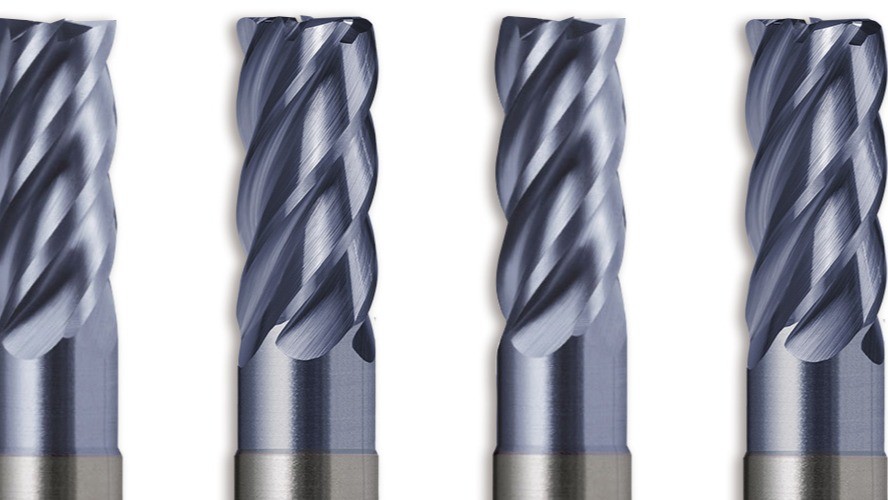
In modern precision manufacturing, carbide end mills have become one of the most essential cutting tools for achieving high-quality, high-speed, and high-accuracy results. As industries demand tighter tolerances, faster production cycles, and superior material performance, carbide tools offer a significant advantage over traditional high-speed steel (HSS) and cobalt tooling. Engineered for durability, rigidity, and thermal stability, carbide end mills help manufacturers push machines to their full capability while maintaining excellent surface finish and dimensional accuracy. This is especially important across aerospace, automotive, medical device manufacturing, mold-making, and precision engineering industries, where even the smallest error can compromise the functionality of a component. In this SEO-optimized guide, we explore why carbide end mills have become a preferred choice in CNC machining, how they enhance performance, and what makes them critical for modern manufacturing success.
One of the most defining characteristics of carbide end mills is their exceptional hardness and wear resistance. Tungsten carbide—a composite material made of tungsten and carbon—is significantly harder than traditional tool steels. This gives carbide end mills the ability to maintain sharp cutting edges even when machining abrasive materials such as titanium, stainless steel, nickel alloys, cast iron, and hardened steels. The superior hardness also enables faster cutting speeds, which translates into shorter cycle times and increased productivity. Because carbide end mills remain sharp longer, they reduce the frequency of tool changes, minimize downtime, and help maintain consistent part quality. For CNC shops focused on high-volume production or continuous machining operations, this durability leads to substantial cost savings over the long term. The reduced tool wear also results in predictable performance, which is essential for automated machining environments and lights-out manufacturing workflows.
Heat resistance is another major advantage that sets carbide end mills apart from other cutting tools. CNC machining—especially at high speeds—generates considerable heat due to friction between the tool and workpiece. If a tool cannot withstand high temperatures, it may soften, lose its cutting edge, and fail prematurely. Carbide materials, however, maintain their strength even under extreme thermal conditions. This allows machinists to run at higher spindle speeds and feed rates without compromising cutting performance or tool life. The superior heat resistance also improves chip evacuation and prevents built-up edge (BUE), where material sticks to the cutting edge and affects accuracy. This is particularly beneficial when working with tough, heat-resistant materials used in aerospace and automotive applications. The result is smoother cutting action, cleaner surfaces, and reduced chances of tool breakage—all contributing to more reliable and efficient CNC operations.
Carbide end mills also enhance performance by offering greater rigidity and reduced vibration during cutting. Tool deflection and chatter are common challenges in CNC machining, especially when machining deep pockets, small features, or hard materials. Because carbide is stiffer than steel, the tool bends less under pressure, allowing for more precise machining. This rigidity ensures the tool maintains accurate contact with the workpiece, preventing dimensional errors and improving overall surface finish. Reduced vibration also means more stable cutting conditions, which helps prevent microcracks and prolongs tool life. For manufacturers producing high-precision components—such as medical implants, aerospace brackets, or detailed mold inserts—this stability is crucial for achieving high-quality results. Additionally, modern carbide end mills come in various geometries, coatings, and flute designs that optimize performance for specific materials and applications. Coatings like TiAlN, AlTiN, and DLC further enhance durability, reduce friction, and enable even higher machining speeds.
Another significant reason carbide end mills improve CNC machining performance is their ability to handle complex and challenging cutting operations. Whether the task involves roughing, finishing, contouring, slotting, or 3D profiling, carbide tools provide the versatility needed to excel in multiple machining scenarios. Their expanded range of cutting geometries allows machinists to optimize chip load, surface finish, and stability across various operations. For example, specialized variable-helix carbide end mills reduce chatter when machining stainless steel, while high-helix designs improve chip evacuation in aluminum. Ball-nose carbide end mills enable highly detailed 3D sculpting for mold and die applications, while long-reach carbide tools provide accuracy in deep cavity machining. This adaptability makes it possible for CNC shops to consolidate tooling, streamline workflows, and machine complex parts with greater ease. As manufacturers increasingly adopt high-speed machining and advanced CAM strategies, carbide end mills offer the precision and resilience needed to support these sophisticated processes.
Ultimately, the reason carbide end mills have become indispensable in CNC machining is simple: they enable manufacturers to achieve higher efficiency, better quality, and more reliable results. With their combination of hardness, heat resistance, rigidity, and versatility, carbide tools outperform traditional alternatives in nearly every measurable category. They allow CNC machines to perform at higher speeds, maintain consistent accuracy, and complete challenging machining operations with confidence. For companies competing in industries where precision and performance directly affect product success, investing in carbide tooling is not just a technical upgrade—it is a strategic advantage. As machining technology continues to evolve, carbide end mills will remain at the forefront of innovation, supporting the production of increasingly complex, lightweight, and high-performance components. By leveraging the strengths of carbide tools, manufacturers can enhance productivity, reduce operational costs, and maintain a competitive edge in today’s fast-paced, high-demand industrial landscape.