
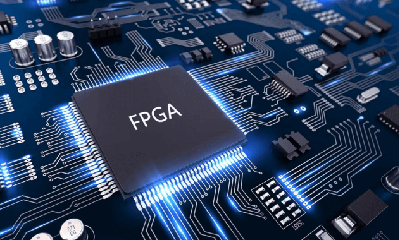
Field-Programmable Gate Arrays, or FPGAs, have become one of the most transformative innovations in the landscape of modern digital engineering. As industries demand faster data processing, lower latency, and more efficient hardware acceleration, FPGAs have emerged as a powerful solution capable of outperforming traditional processors in specific high-speed applications. Unlike CPUs and GPUs, which rely on sequential instruction execution, FPGAs allow developers to configure hardware at the logic-gate level, enabling true parallel processing. This reconfigurable architecture makes them indispensable in fields where speed, precision, and adaptability are essential. From telecommunications and aerospace to automotive systems and artificial intelligence, FPGAs are pushing the boundaries of what high-performance hardware can achieve. Their unique capabilities continue to redefine digital processing standards, making them a core element in today’s data-driven, speed-demanding technological ecosystem.
What sets FPGAs apart is the freedom they provide engineers to design custom digital circuits tailored to specific workloads. An FPGA consists of an array of configurable logic blocks, programmable interconnects, and embedded memory components. Developers use hardware description languages such as VHDL or Verilog to map algorithms directly into hardware, creating circuits optimized for timing, throughput, and power efficiency. This approach eliminates the bottlenecks associated with traditional software running on general-purpose processors. Because tasks can be executed simultaneously across multiple hardware blocks, FPGAs achieve significant performance gains, especially in high-speed signal processing, cryptographic operations, and data filtering applications. Their deterministic latency—meaning consistent and predictable timing—makes them essential in mission-critical environments such as medical imaging, radar systems, and industrial control equipment. In high-frequency scenarios where even microsecond delays can impact system performance, FPGAs deliver unparalleled speed and reliability.
The telecommunications industry is one of the major sectors where FPGAs have demonstrated their strength in high-speed digital processing. As the world shifts from 4G to 5G and beyond, the demand for higher bandwidth, complex modulation schemes, and real-time signal processing has surged dramatically. FPGAs are widely used in base stations, network switches, and radio access networks because they can handle massive data throughput while maintaining low latency. Unlike fixed-function ASICs, FPGAs can be reprogrammed to support emerging protocols, making them ideal for rapidly evolving telecommunication standards. They also play a crucial role in optical communication systems, performing high-speed encoding, decoding, packet inspection, and error correction tasks. Their ability to accelerate data streams and perform parallel filtering operations ensures that modern communication networks run fast, efficiently, and securely. As global connectivity continues to expand, the role of FPGAs in maintaining high-speed digital communication infrastructures becomes increasingly vital.
Beyond telecommunications, FPGAs have gained prominence in artificial intelligence, machine learning, and big data analytics. Traditional AI models running on CPUs often struggle with the massive computational load required for real-time inference, while GPUs, although powerful, may consume excessive power and deliver inconsistent latency depending on workload complexity. FPGAs bridge this gap by allowing computation pipelines to be hardwired into silicon, delivering fast and energy-efficient execution for specific AI operations. Tasks such as convolutional filtering, matrix multiplication, and pattern recognition benefit significantly from FPGA acceleration. In fields like industrial automation, autonomous vehicles, and robotics, real-time AI processing is essential for immediate decision-making based on sensor input. By offloading AI inference tasks to optimized FPGA circuits, systems can achieve faster response times and higher throughput, ensuring safer and more efficient operation. As edge computing gains momentum, FPGAs are becoming the hardware backbone of intelligent edge devices, enabling advanced analytics and decision-making closer to the source of data.
Another area where FPGAs excel is in scientific computing, aerospace engineering, defense systems, and medical technology. In aerospace and defense applications, FPGAs are used in radar processing, electronic warfare systems, satellite communications, and missile guidance because of their resilience, speed, and adaptability. These systems require precise signal interpretation under extreme environmental conditions, and FPGAs deliver consistent performance without compromising reliability. In the medical field, FPGAs power imaging devices such as MRI machines, ultrasound systems, and CT scanners. High-resolution imaging requires real-time data conversion and processing, often involving complex mathematical transformations. FPGAs, with their ability to perform multiple calculations simultaneously, ensure smooth and accurate imaging output. In scientific research, they support particle accelerators, astronomical instruments, and laboratory equipment that rely on high-speed data acquisition and interpretation. These applications highlight the unmatched combination of speed, durability, and customizability that make FPGAs indispensable across critical sectors.
Looking ahead, the future of FPGA technology is tightly linked to the growth of high-speed computing, artificial intelligence, and next-generation communication systems. With the rise of heterogeneous computing—where CPUs, GPUs, FPGAs, and ASICs work together—FPGAs are becoming an essential part of advanced computing architectures. Manufacturers are now integrating FPGAs directly into data centers, enabling cloud platforms to offer hardware acceleration services for developers and enterprises. Innovations such as system-on-chip (SoC) FPGAs combine programmable logic with embedded processors, providing even greater flexibility and performance. Additionally, the emergence of high-level synthesis (HLS) tools allows software developers to program FPGAs using languages like C and Python, lowering the barrier to entry and accelerating adoption. As industries demand increasingly faster, smarter, and more energy-efficient processing capabilities, FPGAs will continue to evolve as a leading solution in high-speed digital engineering. Their blend of customization, parallelism, and reconfigurable performance ensures that they will remain essential tools in shaping the next generation of digital technology—driving advancements across communication, automation, scientific research, and intelligent systems worldwide.